Most rankings of vibe coding tools in 2026 read like repackaged press releases. They reward marketing budgets over actual performance, slot enterprise platforms next to indie prototyping tools as if they serve the same user, and gloss over the problems that surface the moment you move past a demo. If you have been following those guides, you have been reading a curated version of reality.
After extensive testing, community feedback analysis, and production deployment tracking, these are the five vibe coding tools that actually deliver. Not the five with the biggest funding rounds or the flashiest landing pages. The five that hold up when real users build things.
Why Most Vibe Coding Rankings Mislead You
The typical “best vibe coding tools” article evaluates platforms in isolation. It lists features, pastes pricing tables, and moves on. What it never does is account for what happens after the first prompt.
Vibe coding in 2026 is a spectrum. On one end, you have browser-based platforms that generate full-stack apps from a sentence. On the other, you have AI-powered development environments where experienced builders move at 10x speed. Most lists conflate these categories, ranking an enterprise governance platform alongside a tool designed for solo founders shipping a weekend MVP. That conflation has cost people money and time.
The tools below are ranked by one criterion: how reliably they take a user from idea to functional, deployable software without hidden traps. Security posture, code ownership, cost predictability, and community-verified performance all factor in.
1. Cursor.com
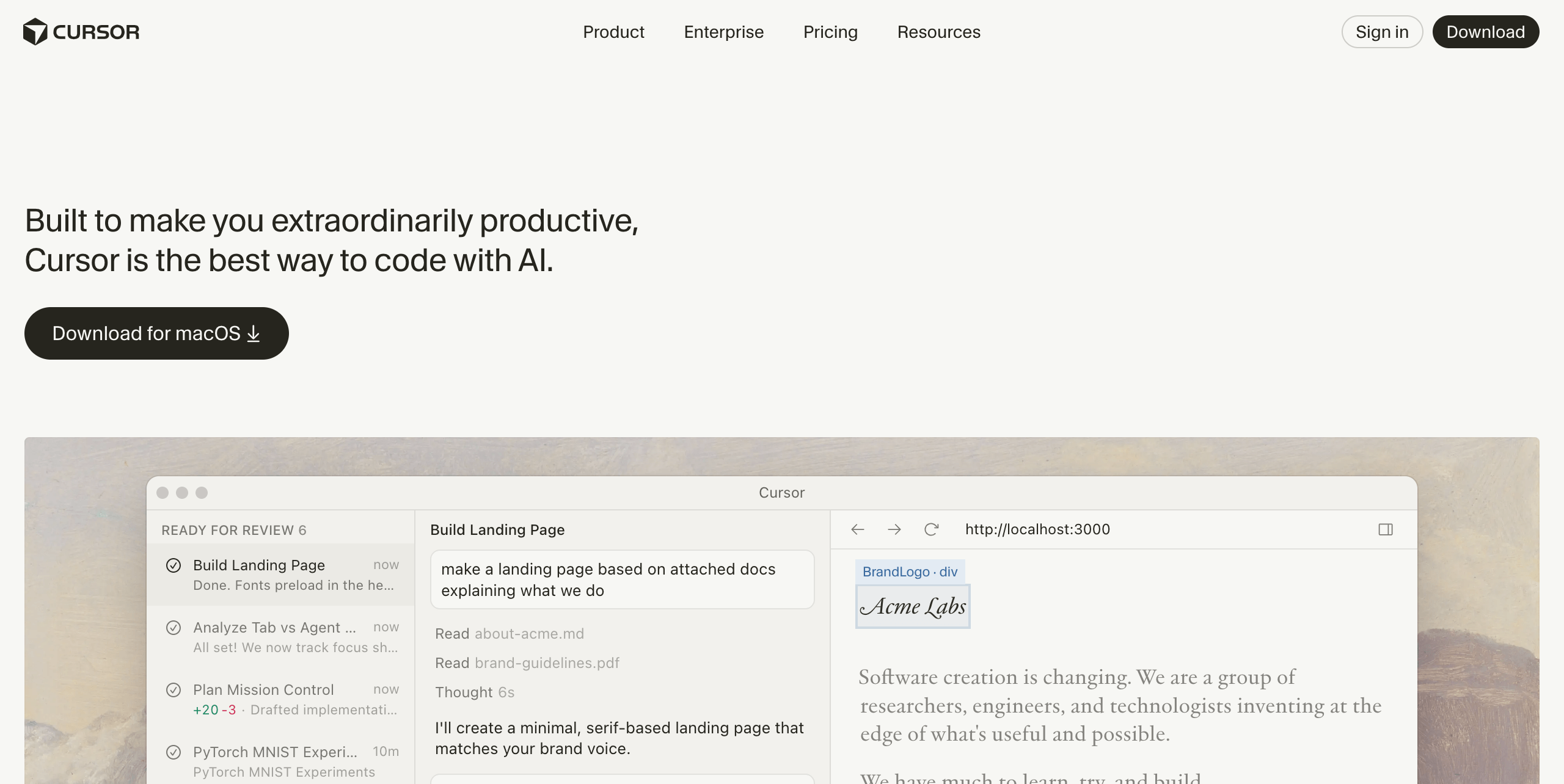
Cursor is an AI-powered code editor built on VS Code that integrates directly with models like Claude, GPT-4, and Gemini. It is not a no-code platform. It does not generate apps from a single prompt and hand you a preview URL. What it does is more valuable: it lets you write production-grade software through natural language conversation while maintaining full control over every line of code.
Developer communities on Reddit and forums consistently name Cursor as their primary vibe coding tool, often paired with Claude as the underlying model. The stack of Cursor plus Claude plus a framework like Next.js has become the default for builders who want AI acceleration without sacrificing architectural quality. One developer described the workflow as “coding with a senior engineer who never gets tired and never judges your questions.”
The reason most lists exclude Cursor is simple. It requires development knowledge. It does not fit the narrative that vibe coding means anyone can build software with zero technical background. But that narrative was always oversimplified. The people shipping real products, the ones generating revenue and serving users, are overwhelmingly using Cursor or tools like it. Ignoring this tool because it demands skill is like ranking the best vehicles and excluding cars because they require a license.
Cursor offers a free tier with limited AI usage and a Pro plan at $20 per month. For developers who already know how to build, nothing is faster.
2. Lovable.dev
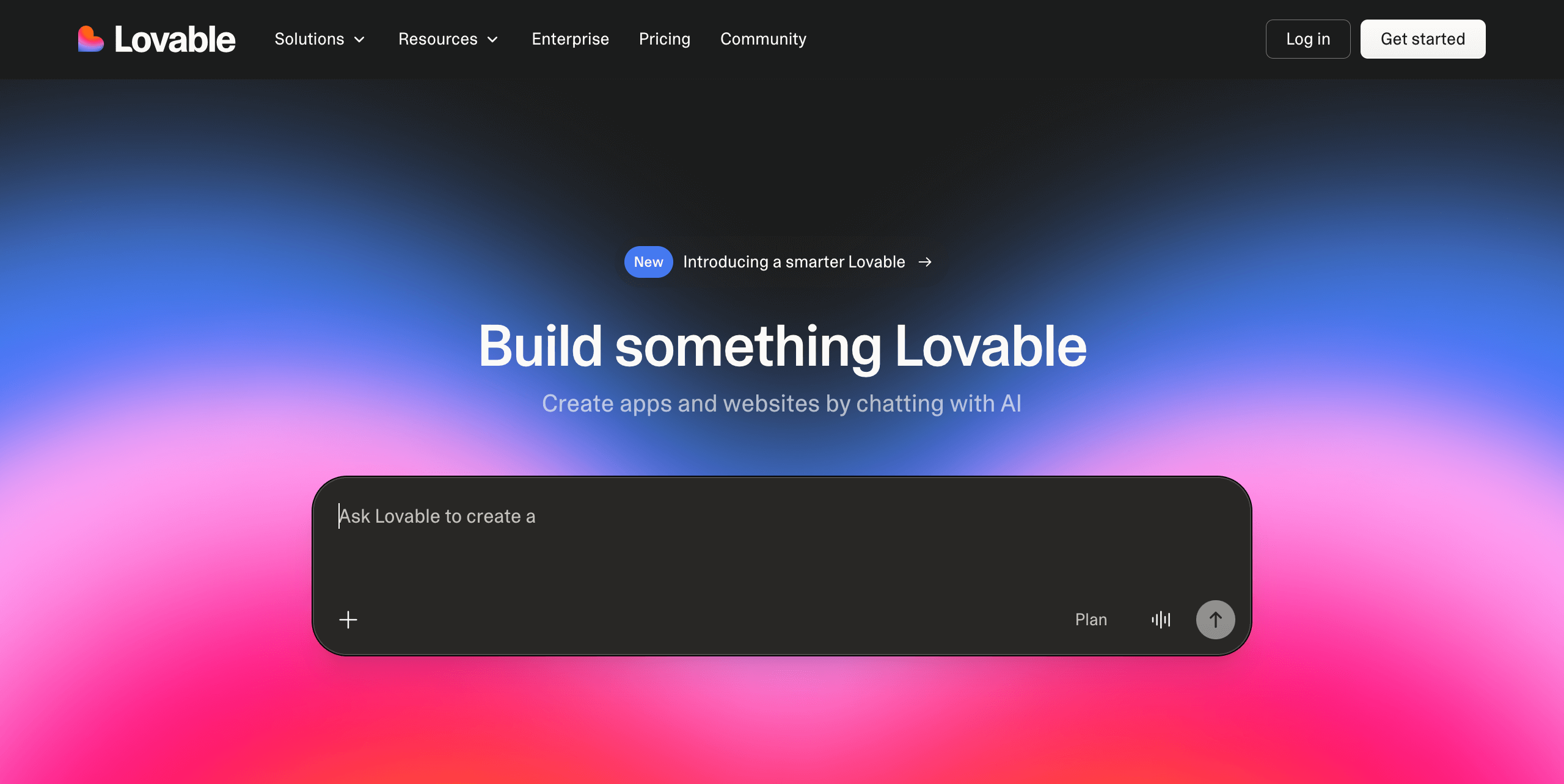
Lovable earned its place as Europe’s fastest-growing startup by doing one thing exceptionally well: turning ideas into working full-stack applications faster than anything else on the market. The platform reached $200 million in annual recurring revenue by late 2025 and secured a $6.6 billion valuation in December of that year. Zendesk reported that teams cut prototype timelines from six weeks to three hours. Those numbers are real.
What separates Lovable from competitors is multi-modal input. You can describe your app in text, upload a design mockup, import directly from Figma, or use voice commands. The platform generates frontend, backend, database schema, authentication, and hosting configuration in one pass. Supabase integration handles databases with minimal friction. GitHub export guarantees full code ownership, meaning you can leave the platform anytime without losing your work.
That code ownership detail matters more than most lists acknowledge. Vendor lock-in is a genuine risk in vibe coding, and platforms that make it difficult to extract your codebase are liabilities, not features. Lovable handles this better than most.
The caveat that other articles mention briefly but should emphasize more forcefully is code quality. Generated code can contain security vulnerabilities, particularly for complex applications. Non-technical users who build with Lovable need a developer to review output before deploying anything that handles sensitive data or processes payments. The speed is legitimate. Production readiness still requires human oversight.
Pricing starts at $25 per month with transparent tiers based on project limits rather than opaque credit systems.
3. Bolt.new
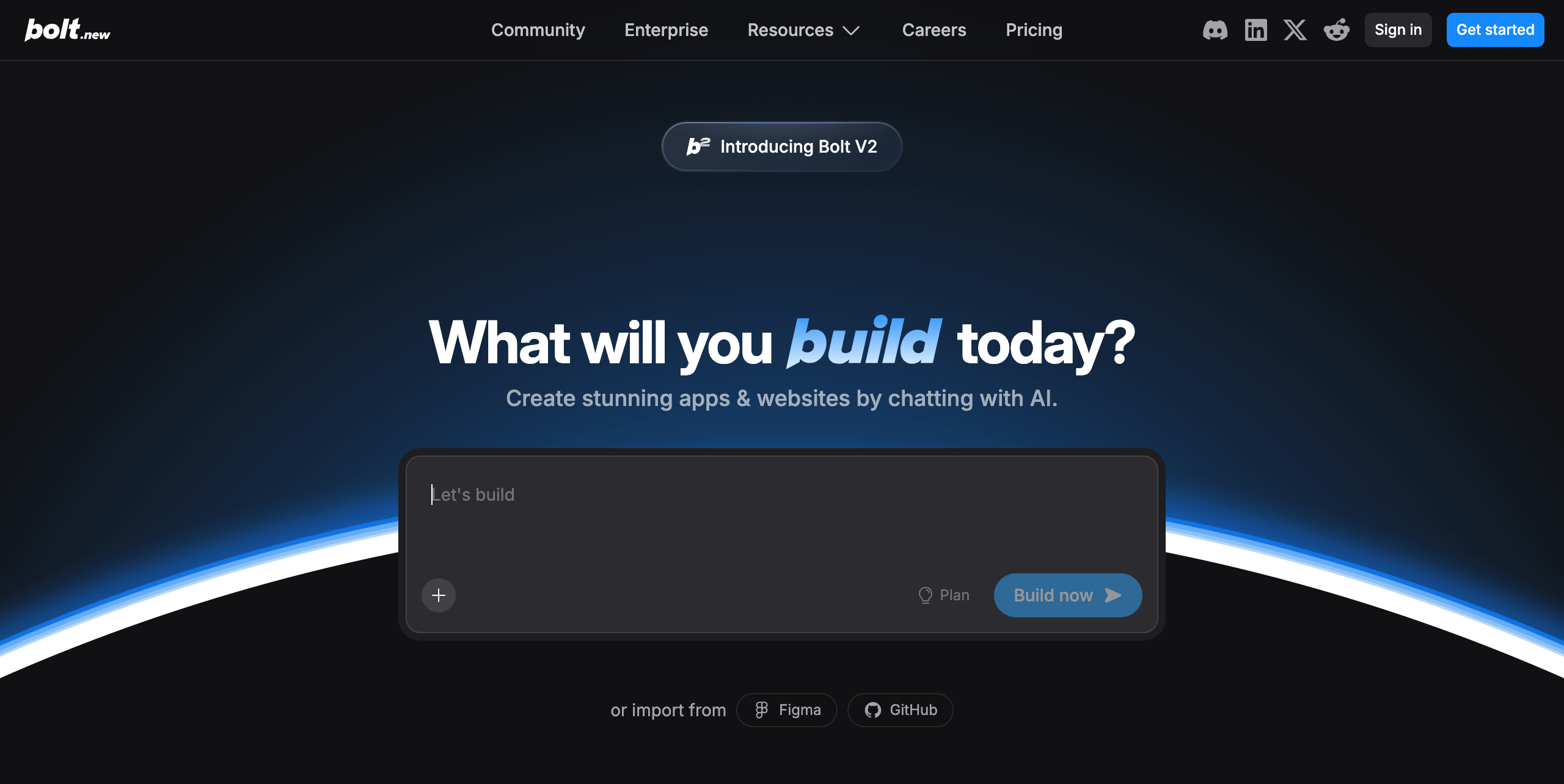
Bolt.new launched in October 2024 and effectively brought vibe coding to the mainstream. Built by StackBlitz using their WebContainers technology, Bolt runs Node.js entirely in your browser with zero local setup. Describe what you want, and Bolt generates a working full-stack application with a live preview. Version 2 added managed databases, authentication, hosting, and Stripe payments. The platform hit $40 million in ARR within six months of its relaunch.
Where Bolt genuinely excels is lightweight to mid-complexity projects: simple websites, internal dashboards, and MVPs with three to five core components. For these use cases, the prompt-to-deployment pipeline through one-click Netlify integration is nearly frictionless.
Where Bolt struggles, and where most lists pull their punches, is with scale. Projects exceeding 15 to 20 components cause noticeable context degradation. The AI begins making unexpected changes or enters error loops that consume credits without progress. Developer communities have documented this frustration extensively, noting that debugging sessions regularly burn more credits than the initial build.
Bolt’s usage-based pricing starts at $25 per month, but actual costs fluctuate with AI processing demand. For straightforward projects, Bolt remains one of the fastest paths from zero to live URL. For anything more complex, set aside a larger budget and have a plan for when manual intervention becomes necessary.
4. Replit.com
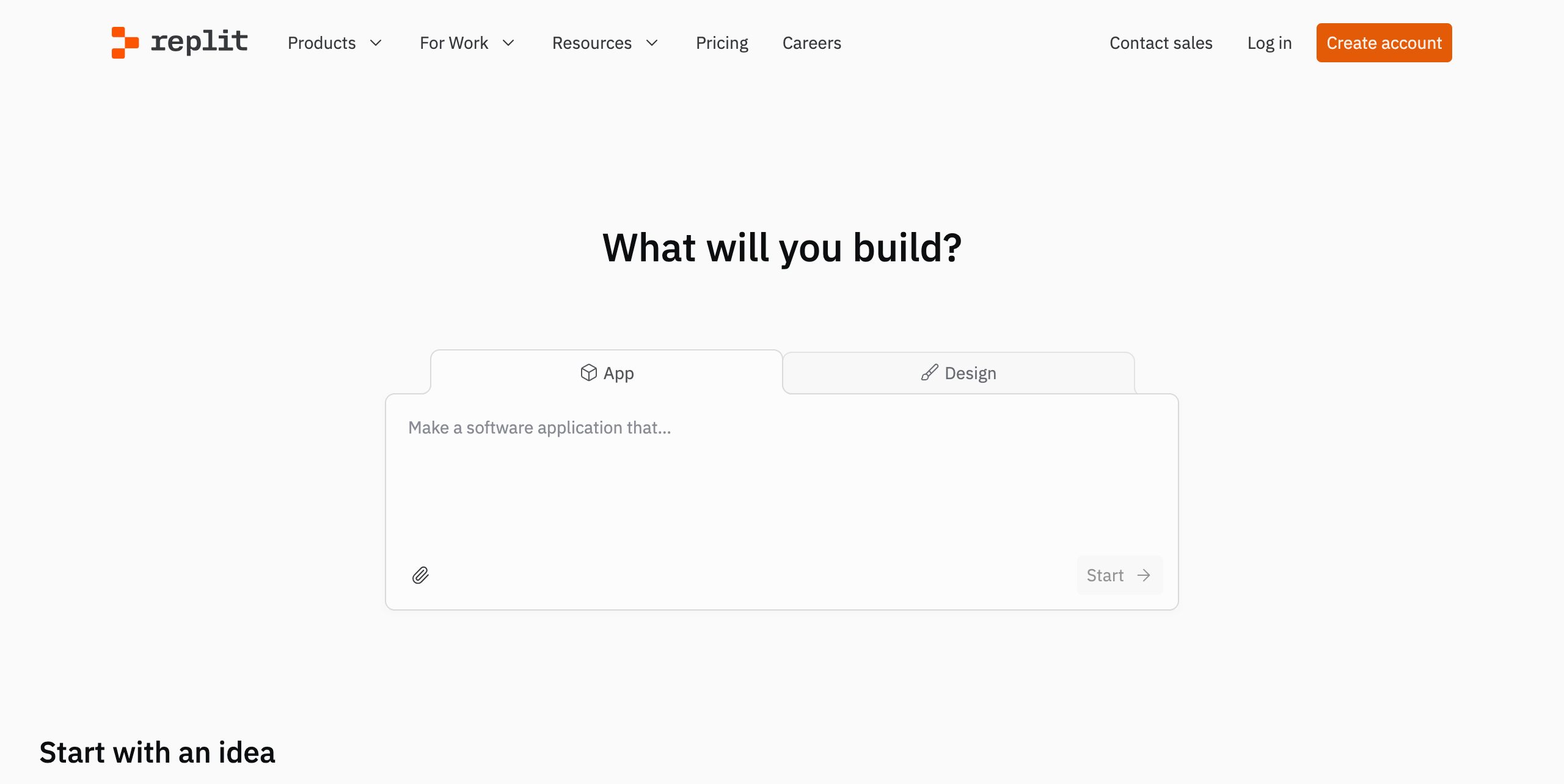
Replit evolved from a browser-based coding playground into a full vibe coding platform built around autonomous AI agents. Agent 3, launched in late 2025, works independently for up to 200 minutes, writing code, testing, fixing bugs, and building other agents. Seventy-five percent of Replit users now come from non-developer backgrounds.
The zero-setup environment is a real advantage. Authentication, databases, domains, and payment processing all work through simple prompts. Over 33 million community projects provide templates for almost any application type. Partnerships with Microsoft for Azure integration and Google for Gemini model access add enterprise credibility. Companies like Duolingo and Zillow use Replit for production development.
The issue that deserves far more attention is cost predictability. Replit uses effort-based pricing where Agent processing time determines your bill. Core costs $20 per month and Teams plans run $35 per user per month, but these are base rates. A single complex debugging session can drain a monthly allocation in one afternoon. During testing, initial creation used credits efficiently, but the moment Agent encountered an error loop or complex logic, consumption accelerated dramatically.
Security is another concern validated by independent research. Cybersecurity firm Tenzai confirmed that Replit and similar tools can ship applications with critical vulnerabilities. Manual review before production deployment is essential, not optional. Budget for roughly double what you expect during any sprint involving non-trivial logic, and treat every generated codebase as a first draft until a human says otherwise.
5. Hostinger Horizons
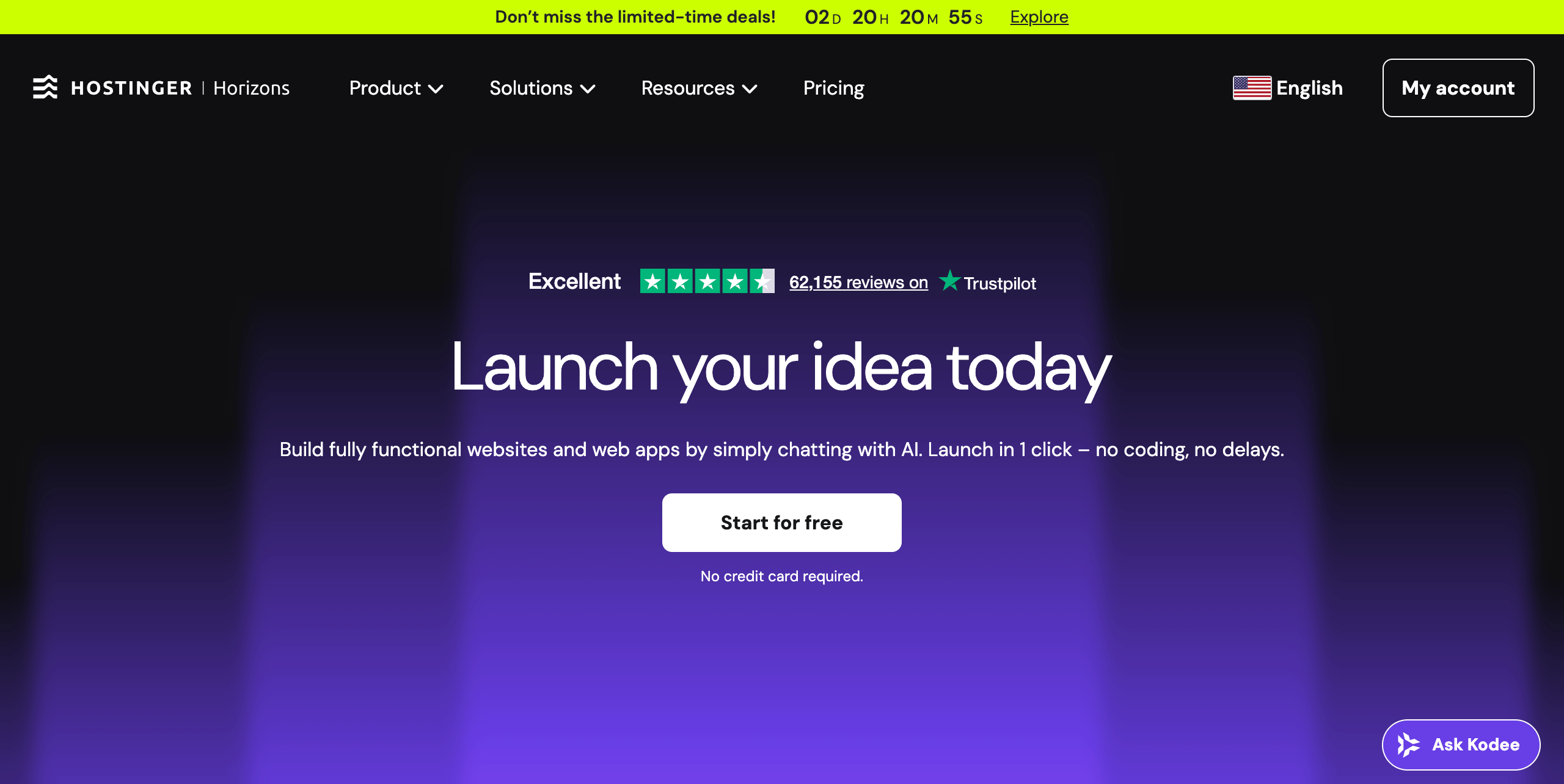
Most vibe coding tools generate code and abandon you at the deployment stage. For non-technical users, configuring hosting, domains, SSL certificates, and DNS records can be more frustrating than building the application itself. Hostinger Horizons eliminates that entire problem by bundling AI code generation with hosting, domains, email, and deployment under one roof.
Launched in March 2025, Horizons uses a chat interface supporting over 80 languages. You describe your application, the AI generates code with a live preview, and deployment happens in a single click on Hostinger’s infrastructure. No server configuration. No SSL setup. No DNS management. A recent upgrade to Google’s Gemini 3 model pushed autofix success rates from 50% to 80%, and the new select-and-edit feature lets you modify specific elements visually without rewriting prompts.
Pricing is where Horizons separates itself from every other tool on this list. Plans start at $6.99 per month with a seven-day free trial. For existing Hostinger customers, Horizons slots directly into the ecosystem they already use. No additional subscriptions, no surprise credit charges.
The limitation is maturity. Horizons is barely a year old, and its template library is smaller than that of established competitors. Highly complex applications may push past what the platform handles gracefully. But for standard web apps, internal tools, and straightforward SaaS products, the integrated approach removes more friction than any other platform in this category.
Note:
Choosing the Right Vibe Coding Tool in 2026
The vibe coding landscape is crowded, and most guides ranking these tools optimize for list length rather than honesty. They include ten or twelve platforms because longer articles perform better in search, not because every entry deserves your attention.
These five tools represent five distinct approaches. Cursor gives experienced developers superhuman speed with full code control. Lovable turns ideas into full-stack prototypes faster than anything else available. Bolt handles lightweight builds with minimal friction. Replit offers autonomous agents that work while you step away. Hostinger Horizons wraps everything into a single subscription that a non-technical founder can manage without outside help.
Pick the tool that matches your skill level, your project complexity, and your willingness to review AI-generated code before it reaches users. Because the one thing every expert list should tell you, and almost none of them do, is that no vibe coding tool in 2026 ships truly production-ready code without human oversight. The best tool is the one whose output you can verify, refine, and trust.